
How to become a female taxi driver in the UK
To become a female taxi driver in the UK, you need a taxi or private hire driver licence from the council where you’ll work, or from Transport for London if you’ll work in the capital. Getting one means passing an enhanced DBS check, a medical and usually a local knowledge test, and holding a full driving licence for at least a year (longer in some areas).None of that is different for women. What stands out is how few women go through it: fewer than 7% of UK taxi and private hire drivers are women and in Nottingham the figure is 6%.
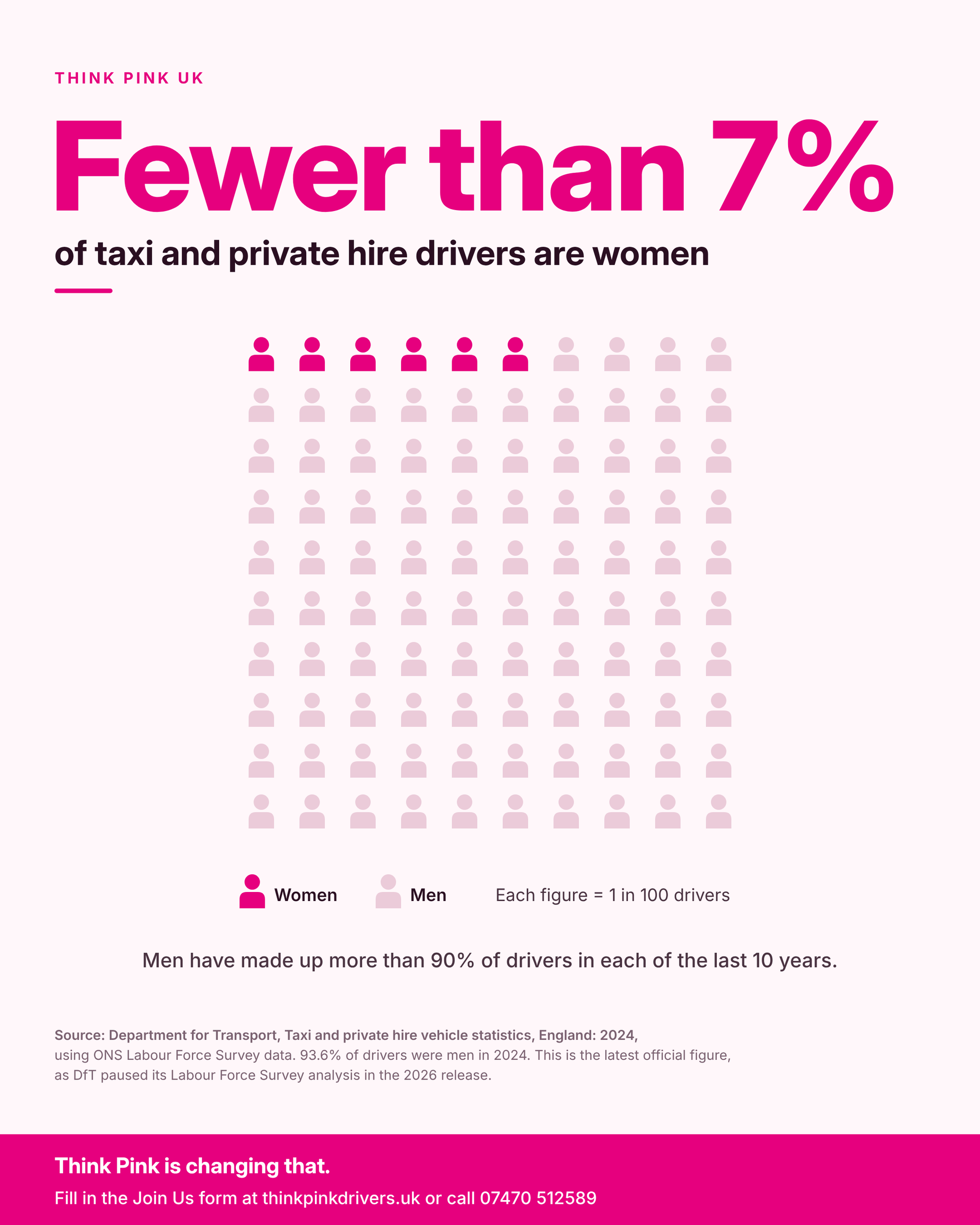
Think Pink UK was set up to change that. It’s a social enterprise established by the Rosie May Foundation that recruits, trains and mentors women drivers, then places them with taxi firms around the country.
Is taxi driving a good job for women?
For many women the appeal is control over their own hours. Think Pink drivers are self-employed and their earnings depend on how much they drive, so the work can fit around school runs, caring or another job. Jennifer White, one of the first Think Pink drivers, started at 25 and went on to win Professional Taxi Driver of the Year in 2025.
Self-employment cuts both ways, though. There’s no sick pay or holiday pay, your income rises and falls with the hours you drive, and demand isn’t spread evenly through the day, so the hours that suit you won’t always be the busiest. You’ll also pay licensing costs before you earn anything: in London, TfL’s own worked example comes to £477 before the medical.
Safety is a reasonable concern. Private hire work is booked in advance through a licensed operator, so the operator has a record of every job, which is a different situation from picking up strangers off the street.
On balance, it suits women who want flexible, self-employed work and can absorb some upfront cost and an income that changes from week to week. If you need a fixed monthly wage from day one, think carefully before you start.
Taxi or private hire: Which licence do you need?
There are two kinds of driver licence, and most new drivers start with private hire.
- Taxi (hackney carriage). Taxis can be hailed in the street or wait at ranks. In London, taxi drivers have to pass the Knowledge, which can take several years of study.
- Private hire. Every journey has to be booked in advance through a licensed operator, such as a local taxi firm. That’s how Think Pink’s fleet partners work, and it’s the licence most drivers hold: 296,800 of England’s 417,300 driver licences in April 2026 were private hire only, according to DfT figures.
If you want to drive both, you may need to apply for each licence separately.
How to get a taxi or private hire licence, step by step:
Licensing is run locally, so the detail depends on where you’ll work. In England and Wales you apply to your council, or to TfL in London. Scotland and Northern Ireland run separate systems. The steps below apply almost everywhere, and gov.uk sets out the basics and points you to your council.
- Check you’re eligible. You need the right to work in the UK and a full driving licence, usually held for at least 12 months. Some areas ask for more: TfL and Brighton and Hove both want three years, and TfL sets a minimum age of 21.
- Apply to the council where you’ll drive. Your driver licence, the vehicle licence and the operator you work for all need to be licensed by the same authority, so apply where you plan to work rather than simply where you live.
- Pass an enhanced DBS check. Since 2020, the Department for Transport’s statutory standards have expected councils to run an enhanced DBS check, including the barred lists, on every driver. TfL also requires you to join the DBS Update Service and keep your subscription going.
- Have a medical. TfL and many councils use DVLA Group 2 standards, the same ones applied to bus and lorry drivers, assessed by a doctor who can see your full medical records. Your GP sets the fee.
- Pass any knowledge and English tests. Many councils test your local knowledge, and some test English too. In London that means a topographical skills assessment plus two English assessments at B1 level, each costing £36.
- Complete safeguarding training. TfL asks for an online Safeguarding Awareness course. Councils outside London set their own training requirements, so check what yours expects.
- Sort out the car, insurance and operator. If you drive your own car, it needs a vehicle licence and private hire insurance. Private hire drivers also have to work through a licensed operator, which is where a fleet partner comes in.
- Register for tax. You’ll be self-employed, so register with HMRC. Renewing a licence later involves an HMRC tax check.
Licences usually last three years. Fees vary by council, so check yours before you budget. For London, TfL’s worked example comes to £477, covering the DBS check, application and grant fees and the assessments, but not the medical.
What Think Pink UK adds
Think Pink can’t skip any of these steps for you, and every Think Pink driver passes the same checks as everyone else. Its support covers the parts a council doesn’t.
- Mentoring from women who already drive. New drivers get support from women who’ve been through it. In Nottingham, Think Pink driver Emma Potts volunteers as a mentor, giving one-to-one support to new recruits.
- Help with licensing. Nottingham City Council works with Think Pink to help women get their private hire licence and supports them once they’re on the road.
- A place with a fleet partner. Think Pink places drivers with established taxi firms, which provide the bookings and day-to-day operational support. You’re still self-employed, but you aren’t finding work on your own.
- Extra training. Safety as a Standard runs additional courses for Think Pink drivers, including mental health awareness and conflict management.
- Member benefits. Think Pink’s commercial partners offer members a year of free tax returns through Eazitax (worth £360), advice on self-employment from KPMG Nottingham volunteers, and a discount on taxi insurance through Plan Insurance Brokers.
In Nottingham, council-licensed Think Pink drivers also carry a pink stripe and smiley face logo on their wing mirrors, so passengers who’d prefer a woman driver can spot one.
Where Think Pink’s fleet partners recruit
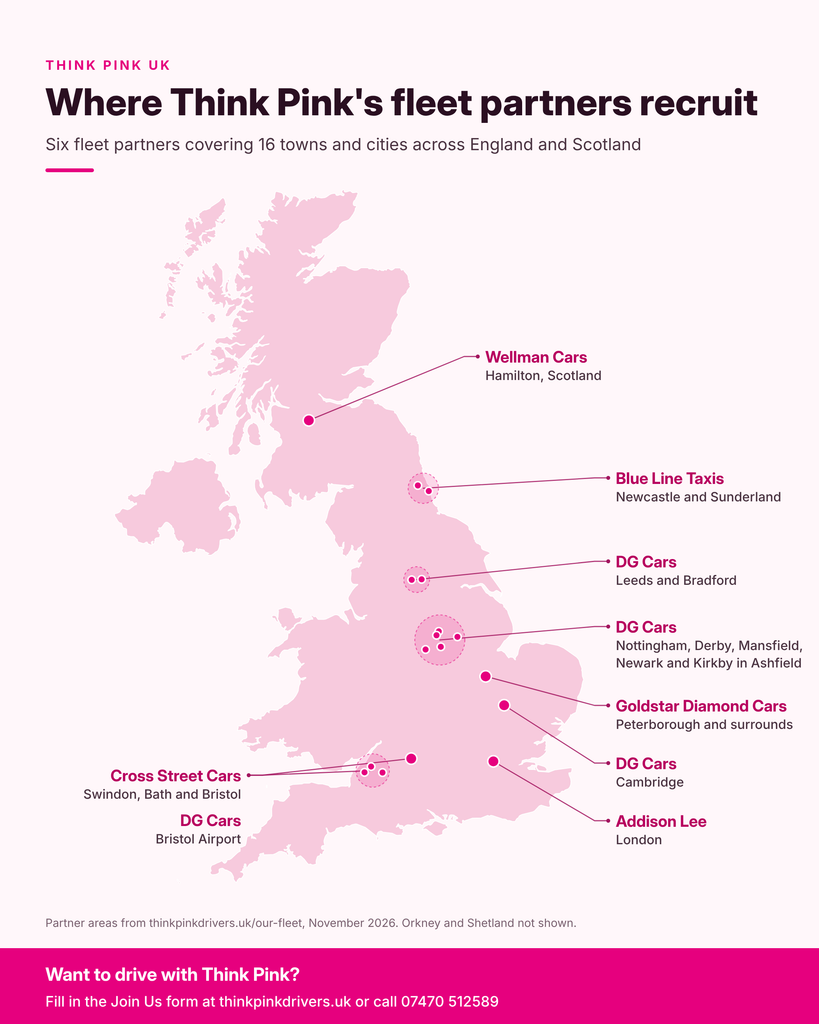
Think Pink works with six fleet partners across England and Scotland. If you live somewhere else, it’s still worth getting in touch, since the partner list has grown since Think Pink launched in the UK in 2022.
How to get started
Check two things first: how long you’ve held your driving licence, and what your council asks for (search your council’s name with “private hire driver licence”). Then fill in the Join Us form, choosing “Think Pink driver”, or call Think Pink on 07470 512589.
Fewer than 7% of taxi and private hire drivers are women, yet the licensing steps are the same for everyone and manageable taken one at a time. Doing them with women who’ve already been through it makes the difference, and that’s what Think Pink UK offers.